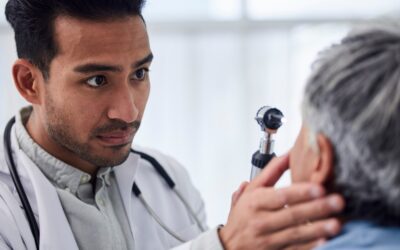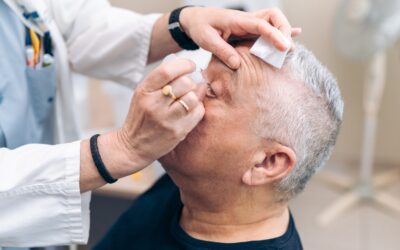
There are important reasons to accurately measure the eye pressure of veterinary patients. Glaucoma is one of the main causes of blindness in animals. Glaucoma is often diagnosed based on symptoms without measuring the animal's intraocular pressure.
The failure to diagnose glaucoma can be disastrous for the animal. Glaucoma leads the list of painful ophthalmic diseases. Even after blindness, the quality of life is poor due not to the actual blindness but to severe pain. Testing for glaucoma is an integral component of good preventive veterinary care.

Intraocular pressure is measured most easily in animals using a portable applanation tonometer. Proper use of a Schiotz tonometer requires that the cornea be directed upwards which is not feasible when testing animals.
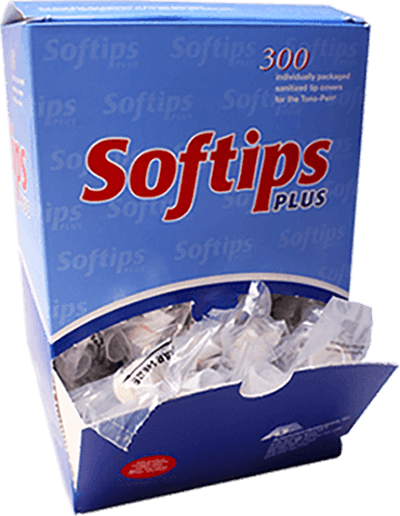
At $2,995, Accupen Vet costs $300 less than the Tono-Pen Vet. Operating costs for tip covers and batteries are also significantly less than the Tono-Pen Vet (see our Cost Comparison). AccuPen Vet also provides more accurate and precise measurements and displays and stores more information than the Tono-Pen Vet.

The national average charged for glaucoma screening is approximately $30. Performing only ten tests a week will repay your investment in approximately two months.
It's easy to train your staff to add glaucoma screening to the initial workup before you see patients. Your practice can promote this service as enhanced preventive care for your patients. Glaucoma screening can become a major profit center for your practice.

Highest Frequency Hereditary Glaucoma of any Animal Species
Glaucoma is a serious eye disease that often leads to blindness. Glaucoma occurs when fluid in the eye is produced faster than it can be removed. This leads to a sustained increase in intraocular pressure. High intraocular pressure causes degenerative changes to the optic nerve and the retina.
Primary glaucoma is a hereditary disease that affects about 40 breeds including Beagles, Cocker Spaniels, Basset Hounds, and Samoyeds. The frequency of breed-predisposed glaucomas in purebred dogs is the highest of any animal species.
Early Detection Allows Time for Preventive Treatment
Most dogs with early to moderate chronic glaucoma are not taken to the veterinarian because the early clinical signs - sluggish to slightly dilated pupils, mild bulbar conjunctival venous congestion, and early enlargement of the eye (buphthalmia or megaloglobus) - are so subtle.
The diagnosis of glaucoma can be made only by a veterinary eye examination and measurement of intraocular pressure. Eye examinations will detect small increases in intraocular pressure, thereby allowing sufficient time to start preventive treatment before glaucoma develops.
Early screening and treatment can delay the symptoms from the normal age of five or six, when the symptoms become obvious, extending the dog's quality of life until nine or ten.
Annual eye examinations should be performed on all dogs with a hereditary predisposition to primary glaucoma.
Measuring IOP Pressure
Intraocular pressure (IOP) is estimated digitally, and measured by Schiotz tonometry or applanation tonometry. Subtle elevations in intraocular pressure, repeated measurements of glaucomatous eyes under medical treatment, or after surgical intervention require instrument tonometry.
Applanation tonometers are very accurate and easy to use. Applanation tonometers are becoming more common in veterinary practices. The applanation tonometer has made it much easier to diagnose and treat the animal glaucomas.
Monitoring the Second Eye
In 50 percent of cases the second eye is involved within two years of the first. A dog with glaucoma in one eye must be watched carefully for signs of glaucoma in the other eye. Intraocular pressure should be measured every four months in these high-risk individuals.
Making Better Breeding Decisions
Dogs with primary glaucoma should not be used for breeding. Hereditary glaucoma impacts owners, breeders and buyers. Dogs usually develop glaucoma by the time they are 6 years old. By that age, they may have had three or four litters, if they are breeding dogs.
The litters born before the parents show signs of glaucoma will likely inherit the possibility of getting the disease. Early detection of canine glaucoma can improve breeding decisions and reduce the incidence of primary glaucoma.
Conclusions
Because of the high incidence of hereditary glaucoma in dogs, tonometry should be routinely performed on high-risk breeds of dogs as part of the general physical examination. Early diagnosis and treatment can delay and ameliorate symptoms and improve breeding decisions.

Tonometry is a procedure that measures the intraocular pressure of the eyeball. The horse has the highest intraocular pressure (IOP) of any land mammal. The horse's head must be up when measuring IOP because pressure increases 87% with the head in the down position.
There are many different studies examining normal intraocular pressures in horses. The mean normal equine IOP ranges from 15 to 30 mm Hg.
ERU and Glaucoma
Tonometry is useful in diagnosing both Equine Recurrent Uveitis (ERU), indicated by low pressure, and glaucoma, indicated by elevated pressure. ERU, which is one of the most common eye problems in horses, can be devastating. Over time ERU can cause blindness in one or both eyes of affected horses.
In some cases, ERU causes secondary glaucoma, which is both uncomfortable and blinding. If glaucoma develops, it is much more likely that the eye will eventually require surgical removal (enucleation).
Glaucoma is difficult to diagnose in horses because they are able to maintain a clear cornea, even with high intraocular pressure. Glaucoma is often characterized as a "silent thief" of human vision because it is painless. It seems to take a similar course with horses.
Tonometry, is indicated in horses that have corneal edema, a red or painful eye, orbital trauma, a history of glaucoma in the opposite eye, or a lens luxation. It is also very useful in assessing response to therapy when treating any of the aforementioned ocular conditions.
Applanation Tonometry
Applanation tonometry provides accurate and reproducible intraocular pressure readings in veterinary patients and is becoming increasingly used in general equine practice.
Applanation tonometers have several advantages over the Schiotz tonometer. They are highly accurate, their readings are less affected by corneal disease, they can be used to measure intraocular pressure in vertically as well as horizontally positioned corneas, and are very easy to use, making them the instrument of choice for measuring intraocular pressure in domestic animals.

General
Canine
- Glaucoma in Dogs: Symptoms and Treatments
- Glaucoma Diagnosis and Therapy (PDF)
- Eye Screening for Cocker Spaniels (PDF)
- Dog Breeds with a Predisposition to Glaucoma (PDF)
Equine
- Equine Glaucoma
- High-Pressure Eyes: Equine Glaucoma
- Glaucoma Discussed at Equine Ophthalmology Meeting
- Equine Recurrent Uveitis
- The Equine Ocular Examination (PDF)
© Copyright 2013. All rights reserved. Website by BizMarquee.com, Inc. [Site Map]